Materia — integrative medical care from a San Francisco physician group.
A medical practice that treats cannabis as a clinical decision, not a transaction. This showcase walks through the strategy, identity, patient materials, and telehealth system shipped by Roamad Creative.

01 · The strategy in one paragraph
Real clinical care. Real time. Real follow-up.
Materia is built for the patient with a serious condition who wants a real clinician — not a five-minute card mill, not an academic medical center that refuses to engage with cannabis at all. The voice is borrowed from a chart note, a published guideline, and a Mayo Clinic handout. The visual identity is borrowed from One Medical interiors and Aesop apothecary packaging. The practice itself is borrowed from no one: 45-minute consults, written care plans, quarterly follow-up.
Positioning
For patients with a serious condition who are considering cannabis as part of their care, Materia is a longitudinal medical practice that prescribes cannabis only where the evidence supports it — with the same clinical rigor any other specialty consultation would receive.
02 · Palette
Five values. Two purposes.
The substrate is clinical white. The primary type color is deep teal-ink. The muted teal carries headings and accents. The soft amber serves a single, regulated purpose: safety callouts (“consult before starting” type notices). Used anywhere else, amber breaks the system.
Color use rule
Amber is reserved exclusively for safety and contraindication callouts. It must never appear as a decorative accent, a button color, or a brand element on letterhead or signage. The first sight of amber on a Materia surface should signal “read this carefully.”
03 · Typography system
Three voices. One conversation.
Crimson Pro · Display · 400 / 400 italic
Real clinical care. Real time.
Inter · Body · 300 / 400 / 500
Materia is a San Francisco medical practice that provides integrative care for patients considering cannabis as part of their treatment. The voice is calm, evidence-led, and plain-spoken — the voice of a thoughtful physician.
JetBrains Mono · Data · 400 / 500
PROGRAM: CHRONIC PAIN · PATIENT 26-A047 · INITIAL CONSULT 2026.03.14
04 · Wordmark
The word, set in italic.
The wordmark is the practice name set in Crimson Pro italic, lowercase. The italic posture leans toward the editorial heritage of a scholarly journal masthead rather than the upright corporate confidence of a tech logo. A small muted-teal dot follows the word on patient materials — the visual shorthand for “in your record.”
05 · Patient material system
Four artifacts. One grammar.
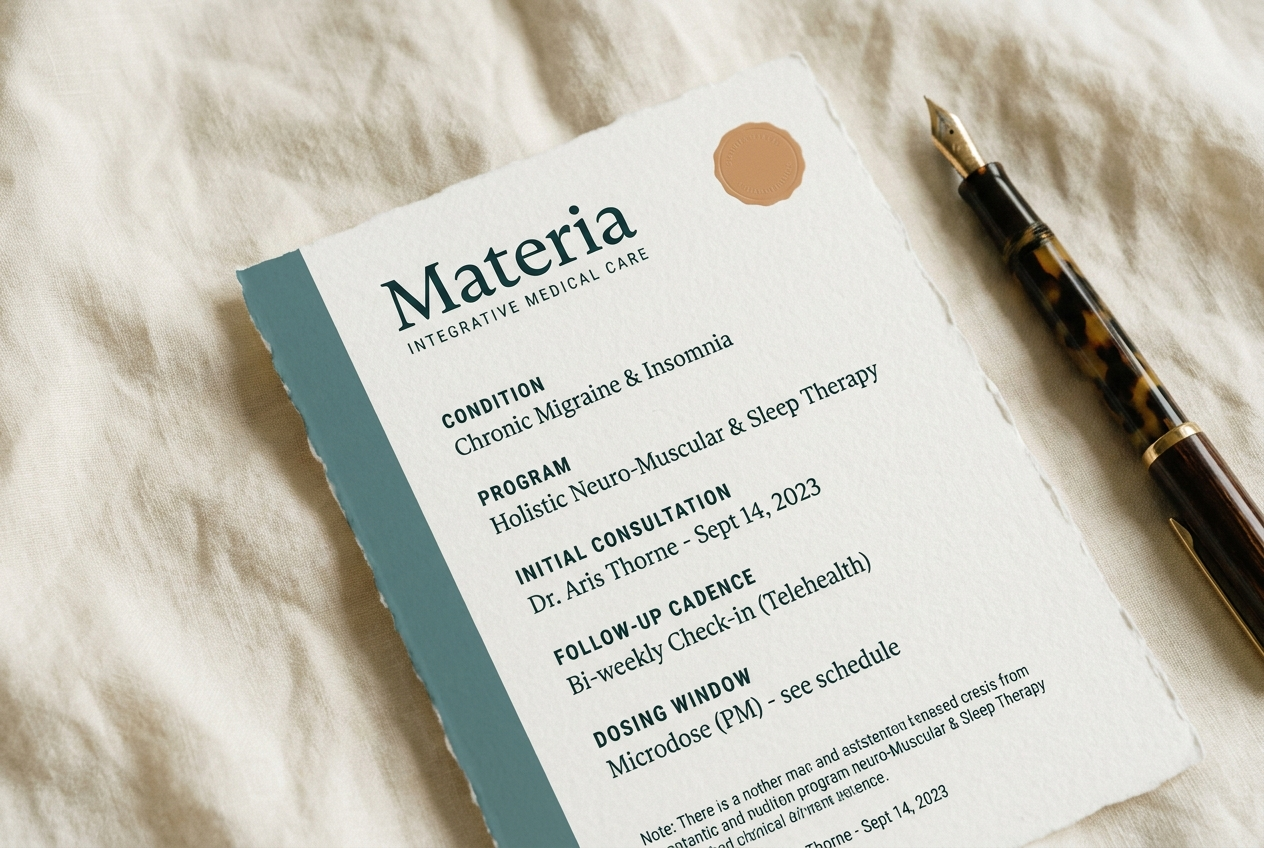
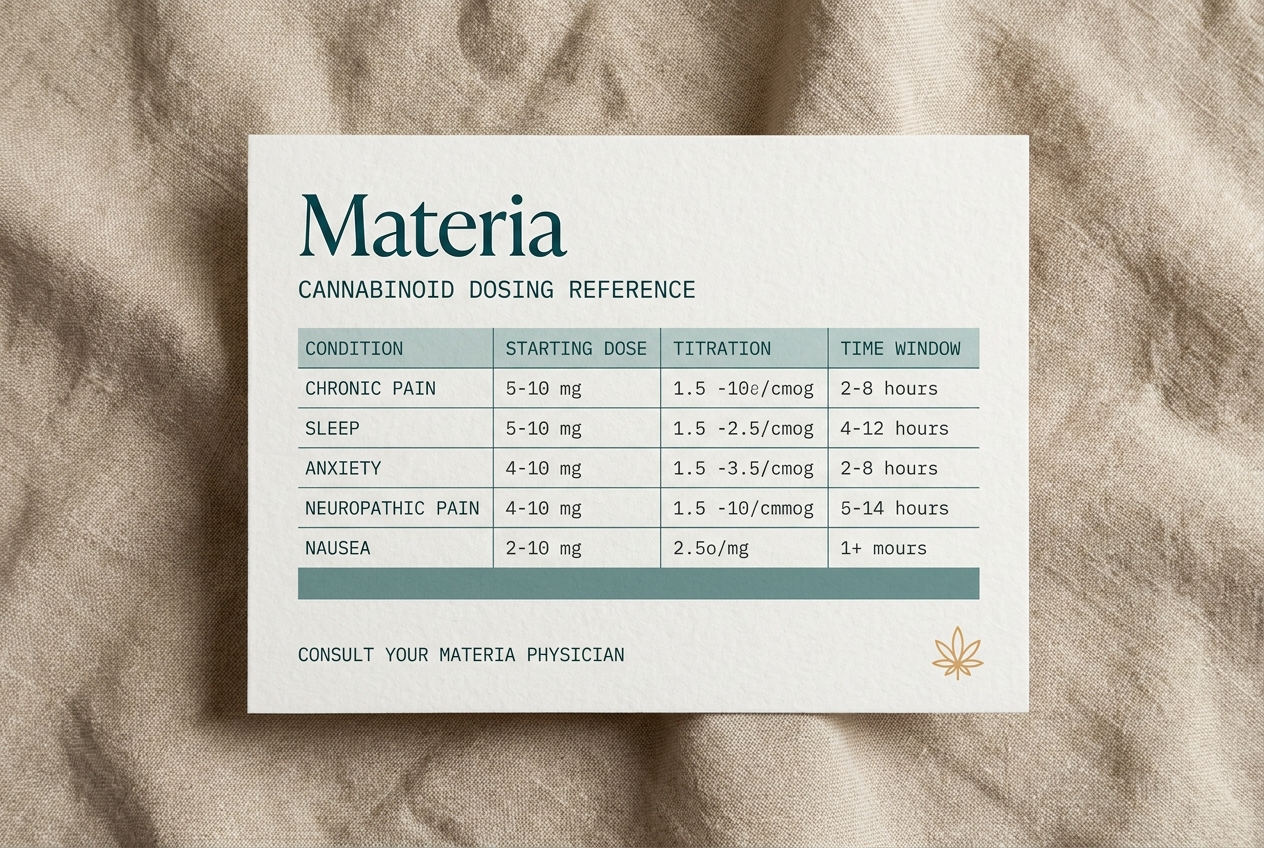
Materia ships every new patient four printed artifacts. Each is set in the same grammar: heavy cream cotton stock, deep teal-ink type, a single muted-teal accent bar, an amber callout reserved for warnings. No glossy varnish. No imagery beyond a single botanical line illustration on the welcome packet.
8-panel folded · 1st visit
Per-visit · physician-signed
Wallet card · per program
Per-visit · coordinated care

06 · The care plan
The single most-read piece of patient communication.
The care plan is the artifact that turns a 45-minute conversation into a portable document. Issued at the close of every visit, the card carries the patient’s condition, program assignment, dosing window, follow-up cadence, contraindication notes, and the physician’s signature. A patient can hand it to a pharmacist, a referring physician, or a family caregiver and the document does the rest of the talking.
What it includes
Condition, program assignment, starting dose, titration schedule, dosing window, expected response window, side-effect watch list, next-visit date.
What it doesn’t
No marketing copy. No brand promise repeated. No QR-code-to-dispensary affiliate link. The plan is a clinical document, not a sales surface.
Amber callout
If the patient is taking a medication with a known cannabis interaction (warfarin, certain seizure medications, some antidepressants), the contraindication is set in amber. The patient must read it before starting.
07 · Voice in practice
How the practice speaks.
| Surface | Materia | Not Materia |
|---|---|---|
| Homepage hero | Integrative medical care for patients considering cannabis as therapy. | Discover the most innovative medical marijuana experience. |
| Consultation page | The initial consultation is 45 minutes. Bring your medication list. | Get your medical card today in just five minutes. |
| Patient handout | For sleep disorders, the available evidence is mixed. Your physician will review the evidence with you. | Cannabis is a revolutionary, best-in-class sleep aid. |
| Referring letter | Patient was seen 2026.03.14 for evaluation of chronic neuropathic pain. Plan attached. | Excited to disrupt the legacy pain-management space. |
08 · Telehealth UI
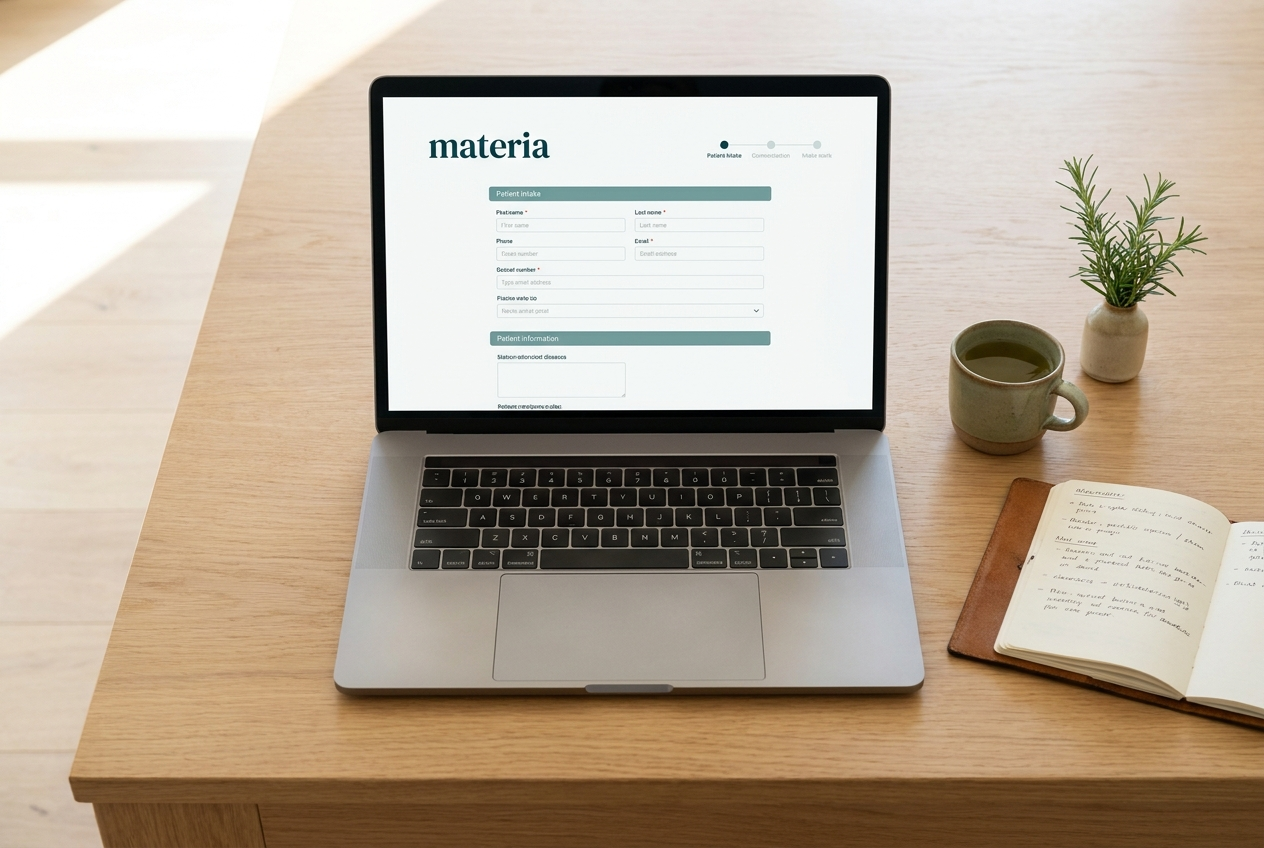
The screen feels like a printed care plan.
The Materia telehealth platform borrows its visual grammar from the patient materials, not from a consumer app. There are no bright primary buttons, no notification badges, no “gamified” progress meters. The patient sees the same Crimson Pro headings and JetBrains Mono data fields they will see on the printed care plan. The medium is digital. The artifact is medical.
09 · Clinic environment
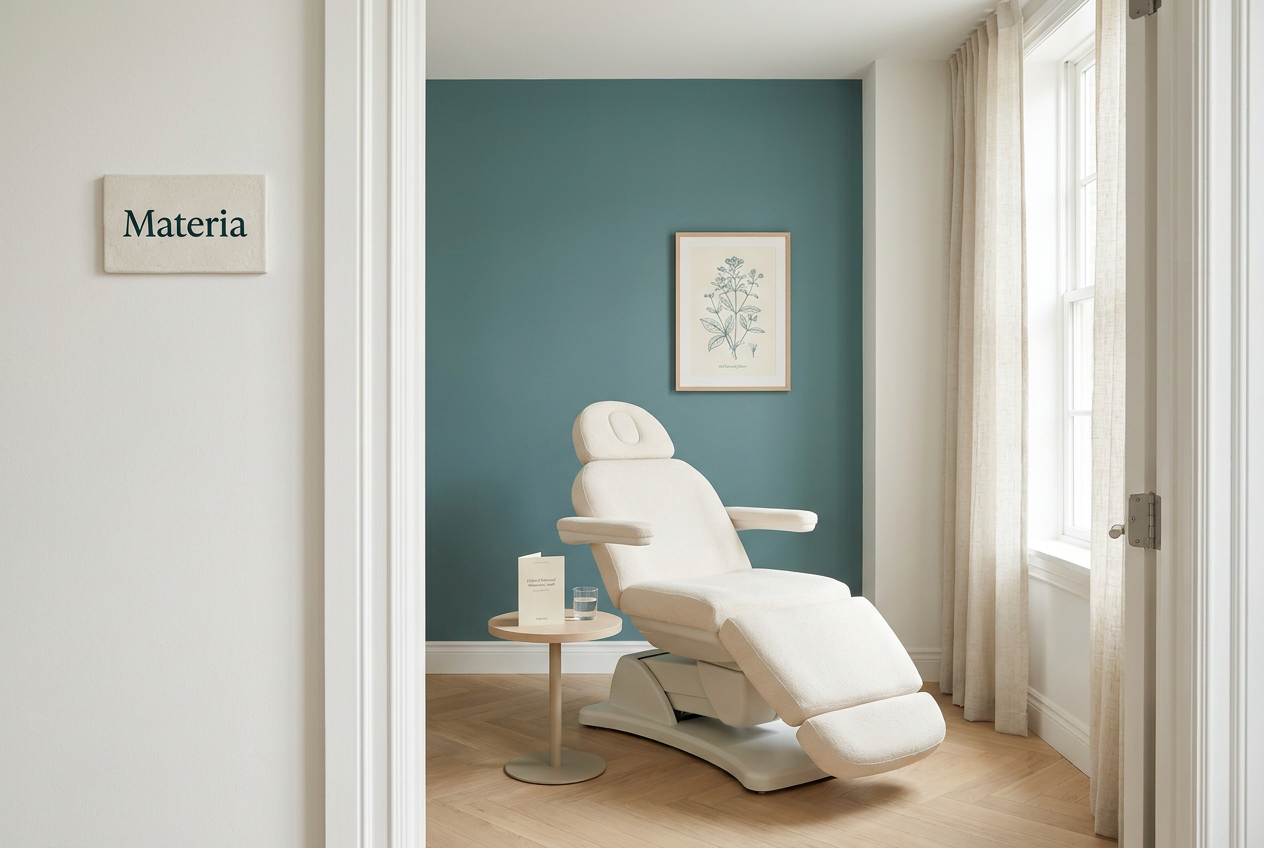
The space the patient walks into.
The Hayes Valley flagship is built on three rules. Light wood floors, never linoleum. Sheer linen window treatments, never blinds. A single botanical line illustration per room, in muted teal — no stock medical art, no smiling-doctor posters. The result reads as residential first and clinical second. The patient’s shoulders should drop two inches as they cross the threshold.
10 · Guideline summary
The rules, on one page.
Always
- Set the wordmark in Crimson Pro italic lowercase
- Use deep teal-ink as primary type color
- Reserve amber for safety callouts only
- Include the standing disclaimer on every patient-facing surface
- Use ISO date format on clinical artifacts (YYYY.MM.DD)
- Cite the evidence grade for any therapeutic claim
- Refer to the substance as “cannabis,” not “medical marijuana”
Never
- Use cannabis-leaf, stethoscope, or caduceus imagery
- Show patient or physician faces without explicit consent
- Use words like “miracle,” “cure,” or “revolutionary”
- Frame the practice around the card, around access, or around speed
- Show dispensary affiliate links on patient artifacts
- Use exclamation marks
- Animate UI elements faster than 600ms
Closing
Materia is the practice the patient’s primary care physician would refer them to if it existed in their city. The system above is what makes that referral possible.